Reducing Post-Order Anxiety with Dynamic Island Tracking
09.2021
Jahez
Saudi Arabia
Overview
Food delivery is a time-sensitive experience. Once users place an order, they usually keep checking the app to understand one simple thing:
“Where is my order now?”
For Jahez, the order journey includes multiple stages: accepting the order, preparing, packing, assigning delivery, on the way, and delivered. These updates are important, but users do not always want to reopen the app every few minutes.
The focus of this case study is not only the final design, but the UI iteration process behind it: how the layout, hierarchy, progress states, and actions evolved across multiple versions.
Problem
After placing an order, users often experience uncertainty.
They want to know:
Has the restaurant accepted my order?
Is the food being prepared?
Is the courier on the way?
When will the order arrive?
Has the order been delivered?
The existing in-app tracking experience can answer these questions, but it requires users to open the app repeatedly.
This creates unnecessary friction, especially when the user is multitasking, working, driving, or using other apps.
The challenge was to design an experience that keeps users updated without interrupting what they are doing.
Design Challenge
The main challenge was balancing visibility and simplicity.
Dynamic Island has limited space, so every element needs to earn its place. The design cannot behave like a full order tracking screen. It needs to show only the most useful information at the right moment.
They want to know:
Has the restaurant accepted my order?
Is the food being prepared?
Is the courier on the way?
When will the order arrive?
Has the order been delivered?
The existing in-app tracking experience can answer these questions, but it requires users to open the app repeatedly.
This creates unnecessary friction, especially when the user is multitasking, working, driving, or using other apps.
The challenge was to design an experience that keeps users updated without interrupting what they are doing.
“The biggest challenge for marketers, founders and copywriters using landing page solutions – like LeadPages and Unbounce – isn’t creating a new page. It’s writing a new page.”

Joanna Wiebe
CEO of Copyhackers
Our new principle that we learned called “The role of one”
Multiple user groups are adversely affected by this problem. For service providers, the absence of a unified booking system results in operational complexities, as they must manage bookings through multiple interfaces and struggle to coordinate appointments efficiently.
Additionally, this affects their ability to provide quality services and hampers their potential for growth.
Context
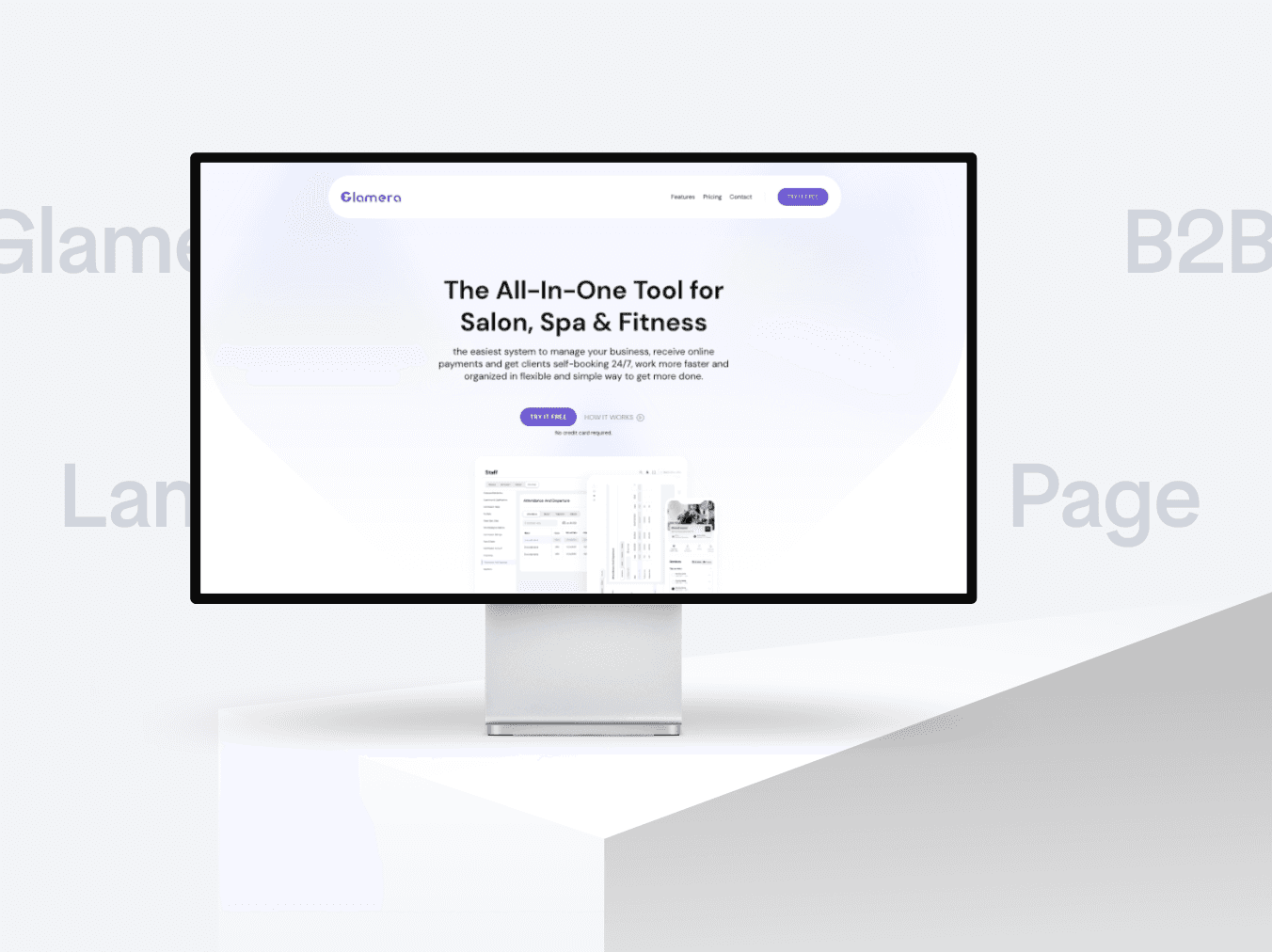
The Challenge: Glamera is an innovative SaaS platform that empowers beauty service providers, including barber shops, beauty salons, spas, and gyms. As a UX designer, my role was to improve the user experience of Glamera's landing page.
Background: Glamera serves as a comprehensive SaaS platform catering to a diverse range of beauty service providers, including barber shops, beauty salons, spas, and gyms.
First we started by define the business goals with alignment meeting
Multiple user groups are adversely affected by this problem. For service providers, the absence of a unified booking system results in operational complexities, as they must manage bookings through multiple interfaces and struggle to coordinate appointments efficiently.
Additionally, this affects their ability to provide quality services and hampers their potential for growth.
“The biggest challenge for marketers, founders and copywriters using landing page solutions – like LeadPages and Unbounce – isn’t creating a new page. It’s writing a new page.”
Joanna Wiebe
CEO of Copyhackers
First we started by define the business goals with alignment meeting
Multiple user groups are adversely affected by this problem. For service providers, the absence of a unified booking system results in operational complexities, as they must manage bookings through multiple interfaces and struggle to coordinate appointments efficiently.
Additionally, this affects their ability to provide quality services and hampers their potential for growth.